Automatic Emergency Steering - My Car Does What Automatic Emergency Steering - My Car Does What

Automatic Emergency Steering

When combined with Automatic Emergency Braking (AEB), this technology can steer your car to help avoid crashes.

What It Does

What It Does: Detects a potential collision ahead and automatically steers in order to avoid impact, or to lessen the severity of impact if the crash is unavoidable.

What It Does Not Do: It can’t always prevent a collision, but may lessen the severity.
Automatic Emergency Steering
HELPING YOU STEER TO SAFETY

What would you like to do next?
Share this video Comment on this video
Watch this video

No Posts Found

Quick Guide

Automatic Braking Step 1

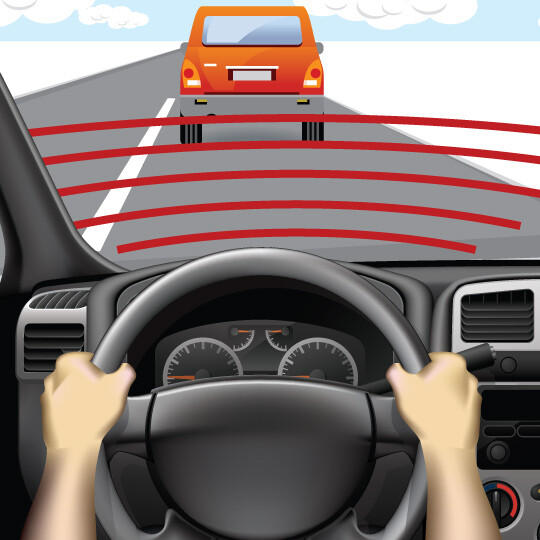
1. Scan

Scan the road for hazards and maintain a safe following distance.

Automatic Braking Step 2

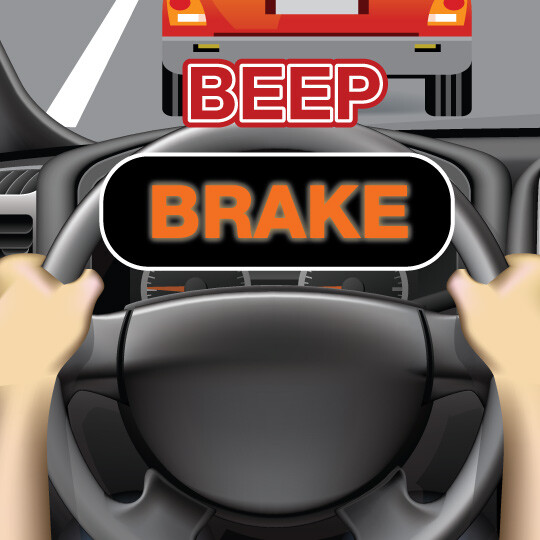
2. Be Alert

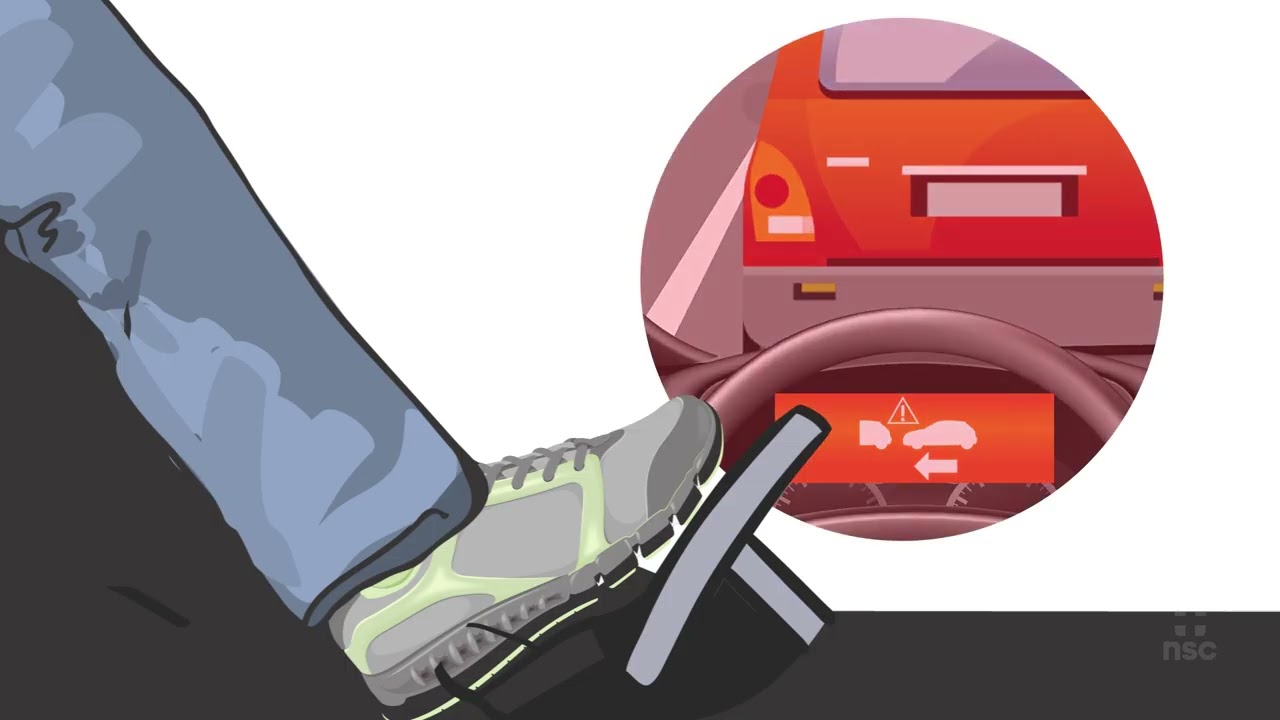
If in a collision imminent situation and you have not responded, warning tones or visual alerts may activate.

Brake or steer to avoid the hazard ahead.

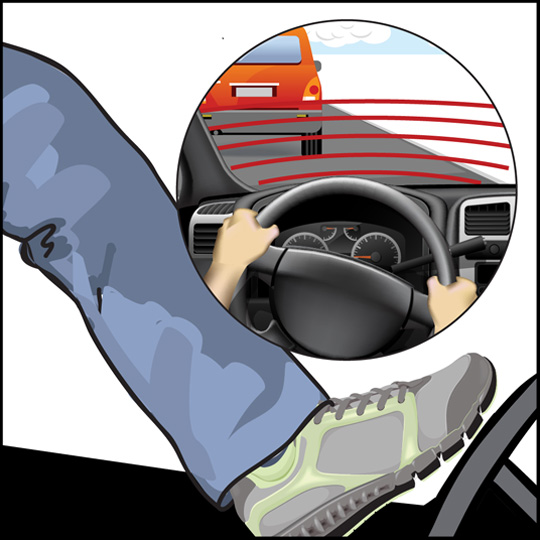
3. Take Action

Brake or steer to avoid the hazard ahead. An automatic emergency braking system may engage and attempt to bring the car to a stop. The vehicle will steer away from the other vehicle or object, and may slow down rapidly or stop on its own to avoid a crash.

How it works

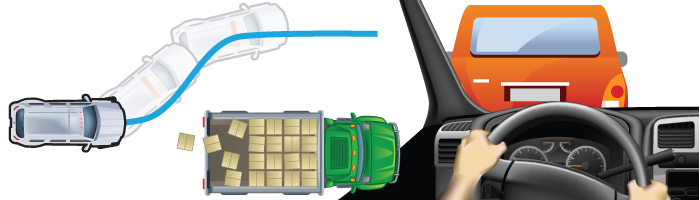
A car, assisted by Automatic Emergency Steering, avoids boxes falling off the back of a truck and into traffic.

The system scans the roadway as you drive, detecting any obstacles or other road users. Then, it calculates if a collision is likely based on speed, distance, and potential alternative paths. If the driver does not seem to be taking enough action to avoid a collision, then the system engages to help steer into open space.

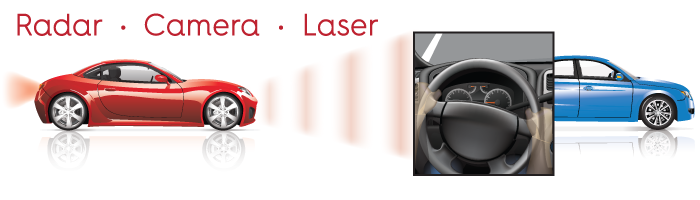
Automatic Emeregncy steering is possible through a combination of radar, lasers and camera

Cameras, lidar, and radar work together. The system can estimate potential time to collision based on speed. Your car’s automatic emergency braking system may be able to stop in time to avoid a crash, but if the computer determines there isn’t enough time, this feature can help you steer to try to avoid impact instead.

Stay alert when using Automatic Emergency Steering. This safety feature is meant to assist drivers, not replace them.

Stay alert – this is not a self-driving system that can perform routine steering actions. It is meant only to help when the computer calculates a collision is likely and the driver has not taken enough action.

  • This system operates only as a last resort to try to avoid a crash. It is not a “self-driving” system that can perform routine steering maneuvers, so do not depend on it to handle your typical driving tasks.
  • Read your owner’s manual to find out the specific limitations of your car’s system. For example, this feature may not work above a certain speed.
  • Like other advanced driver assistance systems (ADAS), Automatic Emergency Steering relies on sensors that need to be properly calibrated and maintained in order to work correctly. This maintenance should only be performed by a trained professional.

Question & Answers

Are there any situations where the system may not activate?

Automatic Emergency Steering may not be 100% reliable in heavy rain or snow, in dense fog, in strong direct sunlight, or on extremely sloped or curved roads. It may also only activate at certain speeds. See your owner’s manual to determine the specific limitations of your car’s system.

Can I still steer the car?

Yes, you can – and should – always try to steer around an obstruction yourself. You are always in control. Automatic Emergency Steering, like the name suggests, is meant to assist when it appears a collision is imminent.

Resources

Related Safety Features